
Written by Mary Dan Eades on February 21, 2014
This season’s Masterworks at the Lobero, Saturday March 29 at 8 pm and Sunday March 30 at 3 pm, will present a program entitled ‘Masters Past and Present’. The first half of the concert will feature a contrasting of two settings of the Te Deum, the first by Franz Joseph Haydn and the second by Anton Bruckner. Following intermission, the focus shifts to the ethereal music of two modern masters, Norwegian Ola Gjeilo and American treasure, Morten Lauridsen, who will be in attendance.
Tickets: $40, $30, and $20 through the Lobero box office.
Te Deum of Franz Joseph Haydn (1732 – 1809)

This magnificent choral drama in three parts was a commission from Empress Marie Therese, the wife of Franz I of Austria. Haydn was a frequent visitor to the imperial palace in Vienna. The Empress had a good voice; Haydn once accompanied her on a private performance of the soprano part of The Creation. The Empress repeatedly used to ask Haydn for some specially-composed church music, but Prince Esterhazy was reluctant to allow his famous employee to write for anyone but himself.
Evidently, however, Marie Therese finally got her way – we know not how! The Te Deum was composed around 1799, but its first recorded performance was not until 1800 at Eisenstadt, the home of the Esterhazy family, to celebrate Lord Nelson’s (and, inevitably, Lady Hamilton’s) arrival there.
The Te Deum is a choral work throughout, without the solo sections that are heard in Haydn’s masses and other sacred works. Two lengthy Allegro passages surround a central Adagio, effectively making the work a concerto for chorus and orchestra. For those with a serious Catholic upbringing, Haydn uses the Gregorian Te Deum plainchant from the eighth psalm-tone.
The opening theme in the Allegro, in the traditional festive key of C major, is sung by the chorus in unison. The Adagio at Te ergo quaesumus opens with a thunderous unison C and proceeds, mysteriously, in C minor with the harmonies moving chromatically to stunning, if brief, effect. The final Allegro returns to the same cheerful mood as the first passage, concluding with a stirring double fugue on the words In te Domine speravi. A coda-like section, distinguished by overlapping instrumental and choral phrases with syncopated rhythms, brings the piece to glorious close.
© Aylesbury Choral Society, December 2003. Used with permission.
Te Deum of Anton Bruckner (1824-1896)
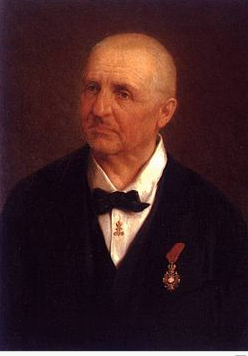
The Te Deum in C major by Anton Bruckner is a setting of the early Christian Te Deum hymn text for chorus, soloists and orchestra, and organ ad libitum. (Bruckner was, himself, a trained organist.) The composer dedicated the piece “to God in gratitude for having safely brought me through so much anguish in Vienna.”
The setting is in five movements, which is not the number chosen by many other composers. However, there is no standard; Haydn’s, for instance, is in one movement
Bruckner had criticized Berlioz’s Te Deum for not being properly “ecclesiastical”, in part because the performance Bruckner attended did not take place in a church. Bruckner started work on his own Te Deum some time before May 1881, but mostly focused his attention on his Symphonies No. 6 and 7. It was not until after finishing (or being close to finishing) the latter symphony that Bruckner resumed work on his Te Deum, finishing it on March 7, 1884. A melody used for the words “non confundar” (in the final movement) is remarkably similar to the main theme of the second movement of Bruckner’s Symphony No. 7.
It was first published in 1885 and premiered in Vienna on May 2 of that year, with a double choir and two pianos substituting for the orchestra. Hans Richter conducted the first performance with full orchestra on January 10, 1886. After that there were almost thirty more performances within Bruckner’s lifetime; the last performance Bruckner attended was conducted by Richard von Perger at the suggestion of Johannes Brahms. On his copy of the score, Gustav Mahler crossed out “for chorus, solos, and orchestra, organ ad libitum” and wrote “for the tongues of angels, heaven-blest, chastened hearts, and souls purified in the fire!”
In the 1890s Bruckner was aware that he might not live to finish his Symphony No. 9, and some commentators have suggested that the Te Deum could be used as a finale. However, Robert Simpson believed that not “even in the poor state of health and mind of his last few months of his life, [would Bruckner have] considered the use of the C major Te Deum as finale to a D minor symphony to be more than a makeshift solution.”
During the Nazi era, Bruckner’s Te Deum and Psalm 150 were ignored, because their existence contradicted the Nazi myth that exposure to Richard Wagner’s music had freed Bruckner from ties to the church. It was not until after the war that Eugen Jochum brought attention to Bruckner’s Te Deum and other sacred music, conducting several concerts and recordings. Herbert von Karajan soon followed suit, and today there are several recordings of the Te Deum.Posted in Blog | Tagged Bruckner Te Deum, Haydn Te Deum, live choral music, live music, live performance, music in Santa Barbara
 American baritone, Ralph Cato has travelled the world extensively, telling stories in song with his warm, clarion baritone voice.
 Tenor, Benjamin Brecher has performed over fifty operatic roles with many of the world’s most prestigious opera companies, specializing in the high lying lyric tenor repertoire. He has performed 16 roles with New York City Opera alone. Career highlights include performances with Opera Orchestra of New York, L’Opera de Nice, Rossini Opera Festival in Pesaro, L’Opera de Montreal, Santa Fe Opera, Opera Theatre of St. Louis, among many others. His orchestral solo repertoire includes Mozart, Handel, Orff, Bach, Haydn, as well as many performances of Britten. In 2000 he began performing the great Irish Tenor songs in a concert produced for him entitled A Celtic Celebration, Twenty years later, the show has become a North American hit with performances with 45 Symphonies in North America. Ben continues his discography having added his twelfth recording in 2016 Forgotten Liszt, with pianist Robert Koenig, and will record a new release in 2022 entitled “Three Centuries of Thomas Moore” including the music of Britten, Berlioz, and Sarah Gibson on MSR Classics. He is a Professor of Voice at University of California Santa Barbara, where he has served as the Head of Voice.
 Tracy Van Fleet is pleased to return to the Santa Barbara Choral Society. As a soloist, she has performed with the Los Angeles Master Chorale, Lüneburg Symphony in Germany, Orquesta Filarmónica de Boca del Río in Mexico, Pasadena Symphony, Naples Philharmonic, Los Angeles Bach Festival, San Diego Chamber Orchestra, Colorado Philharmonic, USC Symphony and Chorus, and others. She has had many appearances with the Los Angeles Opera, Los Angeles Philharmonic, Pacific Symphony, Hollywood Bowl Orchestra, Opera Pacific, San Diego Opera and Opera Colorado.
 Born and raised in Southern California, April Amante is a versatile soprano with expertise and facility in repertoire spanning from early music to contemporary musical theater.